Compacted "pervious" soil behaves like pavement.
Compacted "pervious" soil behaves like pavement.
See Research Article
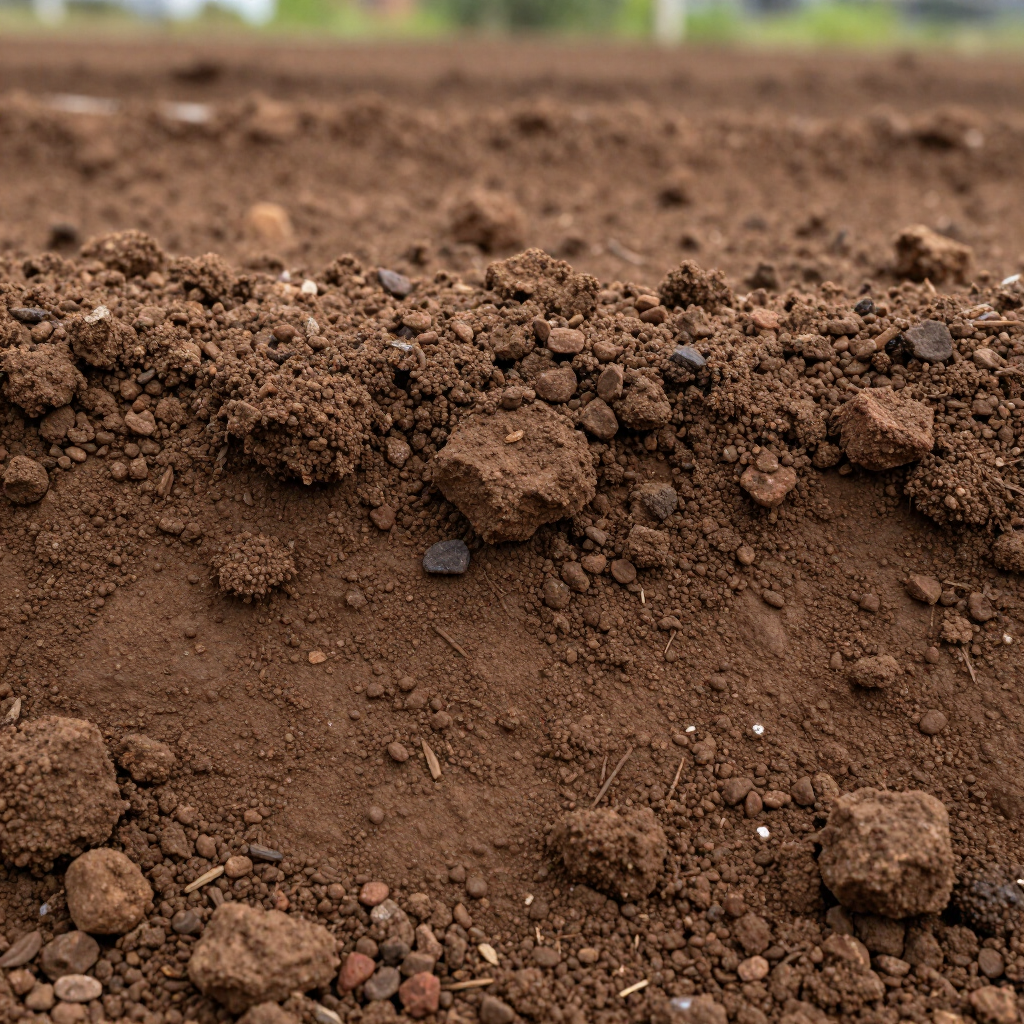
Researchers measured infiltration on sandy soils across compaction levels using double-ring infiltrometers (ASTM D3385).
The collapse is not subtle.
≈ 380–630
UNCOMPACTED FOREST SOIL
(MM / HR)
≈ 8–175
AFTER CONSTRUCTION-STYLE COMPACTION (MM / HR)
Once compacted, a soil that should soak up rain can take in water at rates approaching an impervious surface.
And it happens easily: the same work found that crossing one spot just nine times with an ordinary pickup compacts sandy soil to a degree comparable to a dump truck or backhoe. An installation crew crosses most of a slope far more often than that. — Gregory et al., University of Florida.
HOW FAST — FORESTRY & USFS RESEARCH
Most of the damage is done in the first few passes.
Decades of forest-operations research treat surface traffic as a controlled experiment in compaction. The findings are consistent and fast-acting.
+50%
Bulk density can rise by up to half within the first three machine passes, then climbs only slowly afterward. Forestry extension synthesis
10%
In severely compacted wheel tracks, air and water conductivity fell permanently to one-tenth of undisturbed soil — or less. Peer-reviewed forest soil study
25×
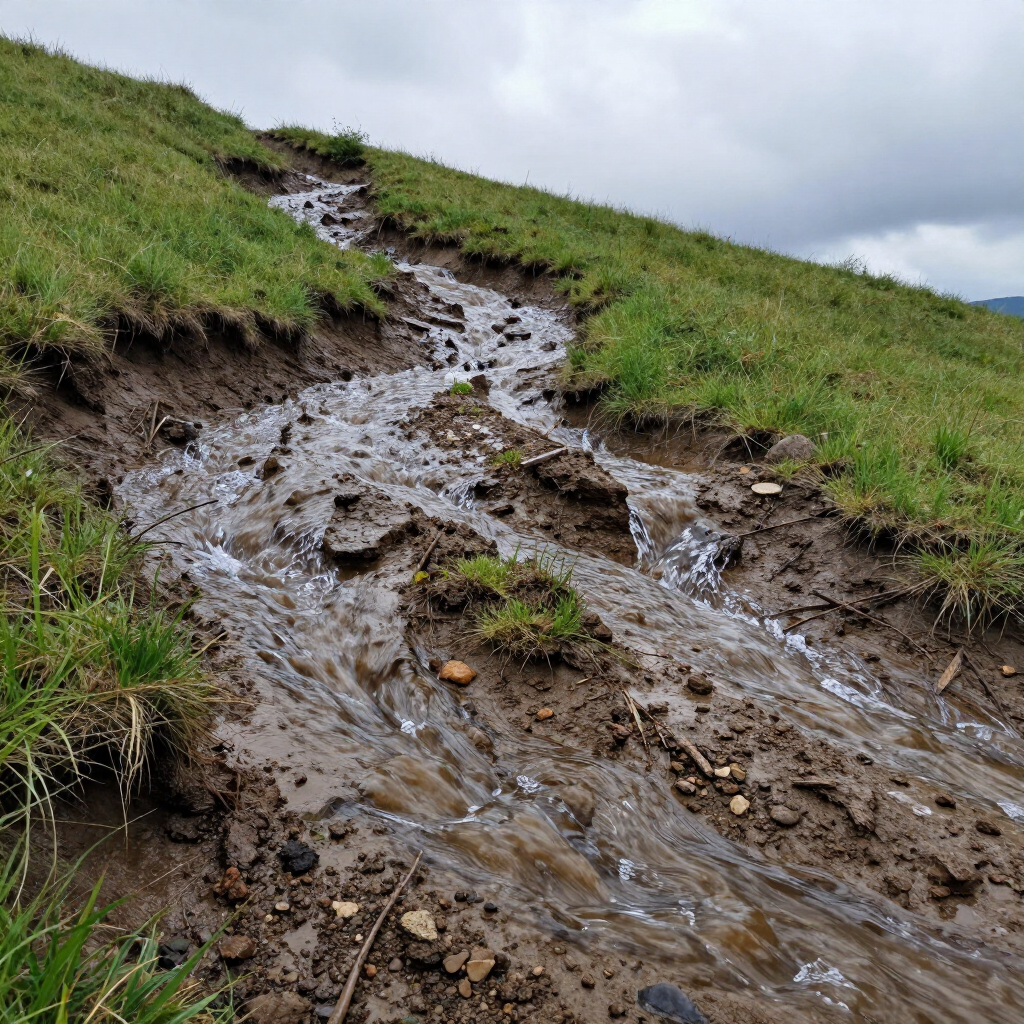
Rainfall-simulator runoff on compacted forest roads ran up to twenty-five times higher than on undisturbed topsoil.
Small-scale rainfall simulator study
PRODUCT EVIDENCE — AUBURN UNIVERSITY (AU-ESCTF)
Applied covers infiltrate better than installed ones.
Auburn's Erosion and Sediment Control Test Facility evaluates erosion control treatments head-to-head under a calibrated rainfall simulator following ASTM D6459. Across bare soil, straw, hydraulic mulches, and rolled erosion control blankets, infiltration was consistently higher on the mulched slopes.
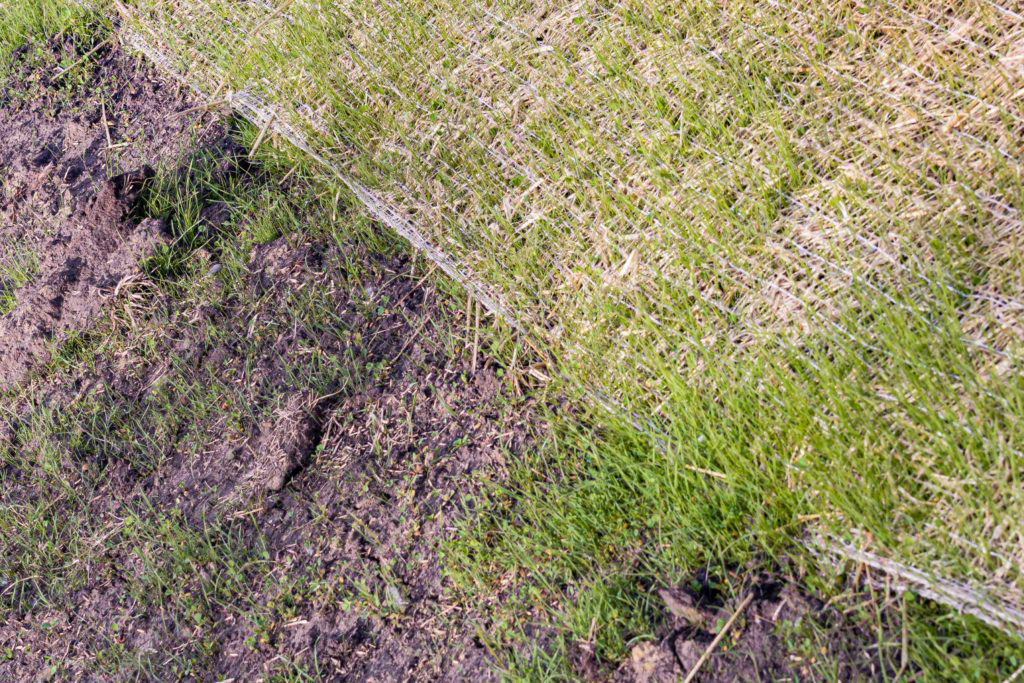
That result is exactly what the compaction science predicts. A cover applied to the surface does not require a crew to press and pin the soil across the entire slope. A blanket does — and the foot traffic and staking that make a blanket work also compact the soil it covers.
TEST CONDITIONS
Standard ASTM D6459
Slope 3H : 1V
Plot 8 ft × 40 ft
Intensities 2 / 4 / 6 in·hr⁻¹
Interval 3 × 20 min
Result Higher infiltration on mulch
AT SCALE — USGS
The same effect shows up across whole watersheds.
This isn't a plot-scale curiosity. Analyses built on USGS streamflow gages attribute rising peak flows to the combined effect of vegetation removal, soil compaction, and added impervious cover — all of which raise runoff by reducing how much rainfall the soil can take in. The mechanism that collapses infiltration on a test plot is the same one that reshapes flood response across a basin.
Texas A&M's Urban Landscape Runoff Research Facility reinforces the surface-condition story from the other direction: in multi-year runoff monitoring, low-infiltration surfaces such as artificial turf produced markedly higher cumulative runoff than mulched and grassed plots.
Protect the soil — don't trade its structure for the look of protection.
Every erosion control method should be judged on one question: does it preserve the soil's ability to take in water, or does it degrade it? A method that holds the surface in place while compacting it has only moved the failure downstream — and made it harder to diagnose when it arrives with the first real storm.
Engineered Wood Strand mulch is applied to the slope, not installed on it — so the protective layer goes down without the compaction that defeats its purpose.
The soil keeps its pore structure. It still infiltrates, still lets seed emerge, and still does the work the cover was nominally there to protect. That is the difference between covering a slope and actually protecting it.
Sources
Gregory, J.H., et al. "Effect of Urban Soil Compaction on Infiltration Rate." Double-ring infiltrometer measurements across compaction levels on sandy soils; University of Florida. Auburn University — Erosion and Sediment Control Test Facility (AU-ESCTF). Large-scale rainfall-simulation evaluation of erosion control practices following ASTM D6459. Small-scale rainfall-simulator assessment of runoff and erosion on compacted forest roads and skid trails (peer-reviewed; up to 25× runoff increase). Peer-reviewed study of forest-soil compaction from heavy machinery (air/water conductivity reduced to ≤10% in severely compacted tracks). Forestry extension synthesis on logging operations and soil compaction (bulk density increase within first three passes). Texas A&M University — Urban Landscape Runoff Research Facility. Multi-year landscape runoff monitoring. USGS streamflow-gage analyses linking vegetation removal, compaction, and impervious cover to increased runoff and peak flows. ASTM International standards D6459, D3385, and D6475.