Water Conservation Toolbox Part Three: "More Pop to the Drop"
Evaporation, Ground Cover and the Interstitial Space Problem
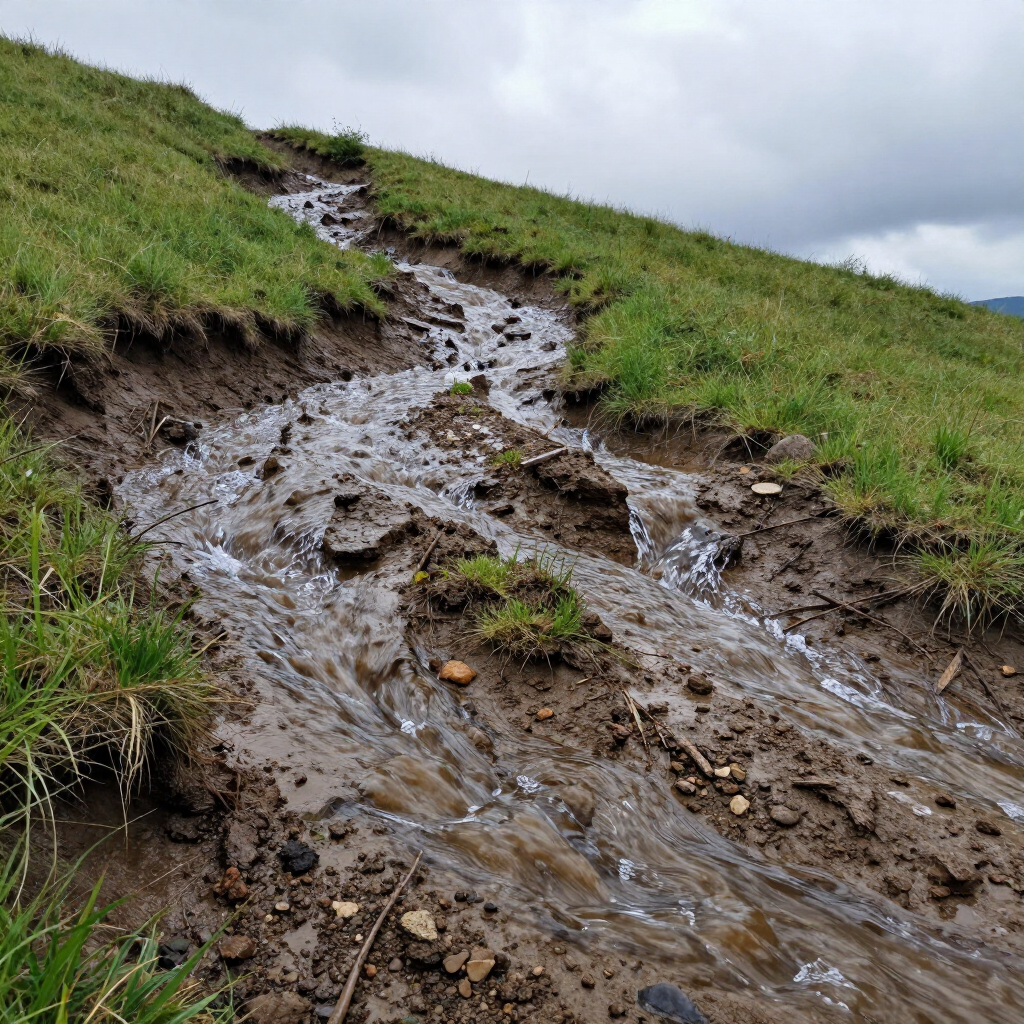
Parts 1 and 2 of this series covered species selection and infiltration— Lessening the impact of the raindrop on the soil surface getting it into the ground rather than off the site. Part 3 addresses what happens to the water that does make it into the soil surface but never gets the chance to infiltrate or be used by a plant at all: evaporation. In native and low-water landscape design, the water lost to evaporation is concentrated in a specific, often under-specified location — the bare ground between plants.
Why Interstitial Space Is the Overlooked Failure Point
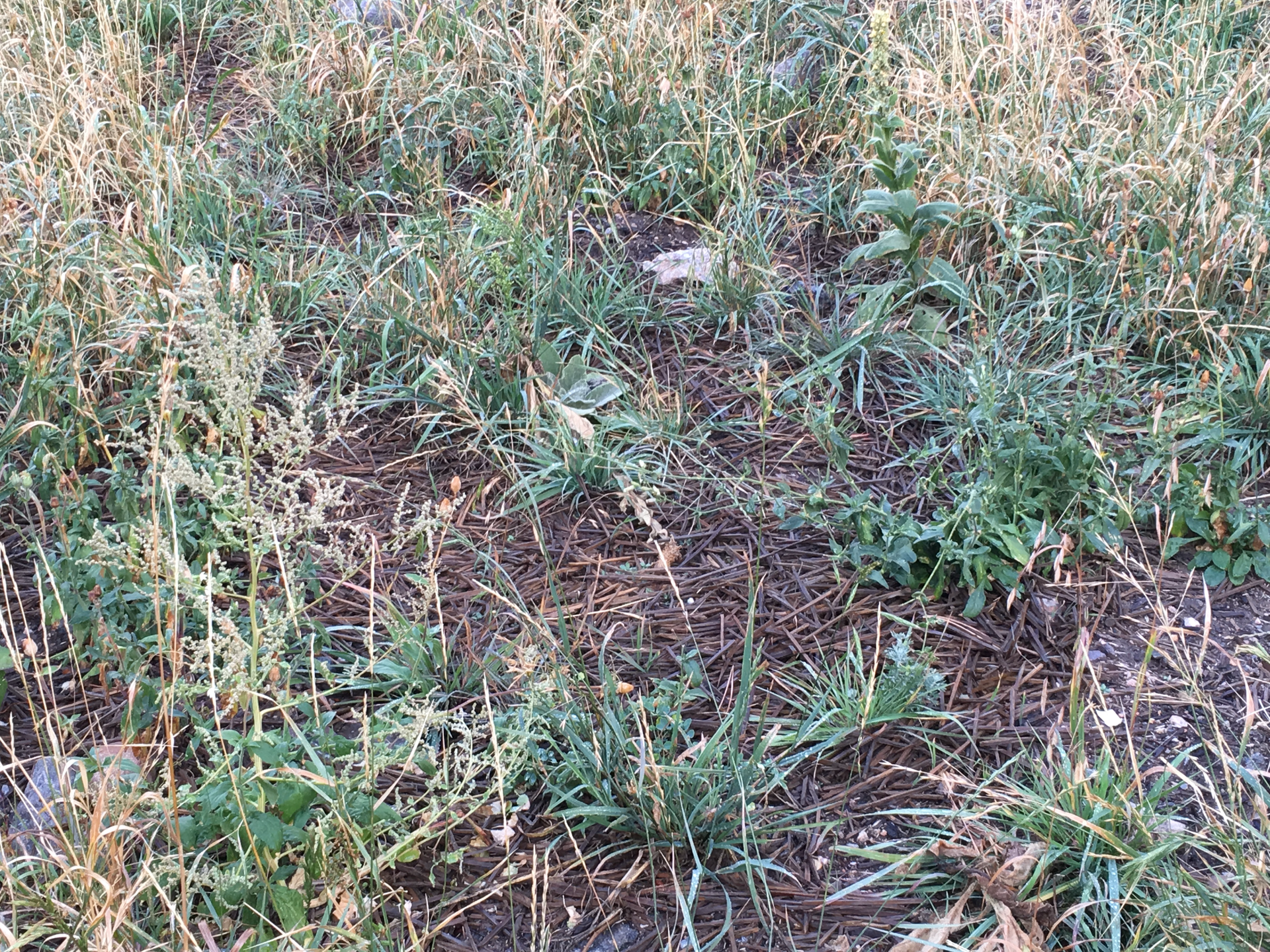
Native and low-water plantings are, by design, spaced more openly than turf. A buffalograss or blue grama planting, or a native forb and bunchgrass mix, doesn't form a continuous, gap-free canopy the way mowed turf does — and that's part of what makes it low-water in the first place. But it also means a larger proportion of the site is bare soil at any given point in the establishment period, particularly in year one and two before plants reach mature spread.
That bare interstitial space is exactly where evaporation losses concentrate. Agronomic research on mulching and crop water use notes that evaporation from the soil surface is most significant precisely when a canopy has not yet closed and shading is incomplete — once a canopy closes and fully shades the soil, evaporation losses drop sharply and nearly all water loss shifts to plant transpiration, which is water the plant is actually using rather than losing. A native landscape's wider plant spacing means it spends a longer time in that pre-canopy-closure state than a bluegrass lawn ever does, which is exactly the reason the ground between plants needs to be treated as its own design element, not a gap to be ignored until the plants fill in.
What the Research Says About Cover and Evaporation
NRCS Conservation Practice Standard 484 (Mulching) sets a specific, testable benchmark for this problem: mulch materials should cover at least 90 percent of the soil surface to meaningfully reduce evaporation. That threshold matters because partial coverage leaves enough exposed soil for evaporation to continue at close to bare-soil rates in the uncovered fraction.
Controlled studies on mulch depth and evaporation back up why coverage and depth both matter. One replicated study found that a mulch layer reduced surface evaporation to roughly 40 percent of the loss rate measured from bare soil, with all common mulch materials performing similarly once applied at an effective depth — the deciding factor was thickness and coverage, not material type. That same study found that doubling mulch depth from 5 to 10 centimeters maintained soil moisture roughly 10 percent higher through most of the test period, though increasing depth further, to 15 centimeters, produced no additional benefit — useful data for anyone trying to specify a cost-effective application rate rather than simply maximizing depth.
A broader review of mulching research across irrigation science reached the same conclusion from a different angle: mulching's evaporation-reduction effect is most pronounced early in a planting's life, exactly the establishment window when a native seeding or plug planting has the least canopy coverage and the most exposed interstitial soil.
The Shade Mechanism
Evaporation is ultimately an energy-driven process — water loss scales with how much solar energy reaches and heats the soil surface. This is why shade, whether from mulch or from plant canopy, does double duty: it doesn't just reduce evaporation directly the way a physical barrier does, it also lowers the surface temperature that drives evaporation in the first place.
Field research comparing surface temperatures across cover types found bare soil and mulch surfaces run dramatically hotter in direct sun than in shade — one urban surface-temperature study recorded shading reducing surface temperatures by an average of 20°C across the tree species studied, with some species producing reductions of nearly 40°C. The same research found bare soil showed one of the largest shade-driven temperature swings of any surface type tested, second only to mulch itself — meaning the interstitial gaps in a young native planting are also the hottest, highest-evaporation-demand parts of the site precisely when plant canopy isn't yet available to moderate them.
Research on grass tussock spacing found the effect of ground cover on soil moisture can be dramatic: covered soil maintained volumetric moisture content up to twelve times higher than adjacent bare soil under the same conditions, an effect the researchers attributed specifically to the reduction in evaporative demand that cover and shading provide — separate from any water the plants themselves were using.
The Practical Spec Question: How Long Does Cover Need to Last?
This is where the interstitial space problem becomes a specification and material question rather than just a design principle. A newly planted native landscape doesn't reach full canopy closure in one season — establishment for native grass and forb species commonly runs two to three growing seasons before plant spread meaningfully closes the gaps between individuals. Whatever ground cover is specified for those interstitial spaces has to remain functional — intact, in place, still providing the coverage percentage and shade effect the research above depends on — for that entire window, not just through the first summer.
A cover material that degrades, blows off, or compacts into a crust within a single season leaves the site back at bare-soil evaporation rates for the balance of the establishment period, undoing the benefit before the planting has had the chance to close the gap on its own. For spec writers, that argues for evaluating candidate mulch or cover materials specifically on multi-season durability and coverage retention — not just first-year appearance or cost per unit area — since the entire evaporation-reduction case above depends on the cover still being there when the second and third growing seasons arrive.
The Bottom Line for Decision Makers
Water lost to evaporation from bare interstitial soil is one of the largest, least visible water losses in a native or low-water landscape, concentrated specifically in the gaps between plants during the multi-year window before canopy closure. NRCS's 90-percent coverage benchmark and the research on mulch depth and shading both point to the same conclusion: coverage percentage, depth, and — critically — how long that coverage lasts relative to how long establishment actually takes are the variables that determine whether a landscape's water conservation benefits show up in year one or get lost to evaporation before the plants ever get the chance to deliver them.
Next in this series: designing for stormwater capture and detention on retrofitted native landscapes.